Table of Contents
If you’re reading this, you’re probably staring at a $20,000+ Leica GPS system that’s currently useless because of a $100 cable. I’ve been there—standing in a muddy field with a critical survey deadline, only to discover the cable connecting my GS15 to the radio modem has failed. The DRRI 8-pin data cable promises to solve this exact problem, but does it deliver the reliability surveying professionals actually need?
After testing this cable across multiple job sites and comparing it against both budget imports and premium OEM options, I can tell you the DRRI occupies a unique middle ground. It’s not the cheapest option available, but it’s far from the most expensive. The real question is whether it strikes the right balance between cost and field reliability.
Key Takeaways
- Solid mid-market performer that outperforms generic cables but lacks OEM-level ruggedness
- Perfect compatibility with Leica GS15 and SATEL 35W modems—no connection issues detected
- 2-meter length is practical for most field setups without excessive cable management
- Build quality is good but not exceptional—adequate for typical use but may struggle with extreme conditions
- Significant cost savings over Leica OEM cables while maintaining reliable performance
Quick Verdict
Best for: Surveying companies needing reliable cables for daily use without OEM pricing, replacement for aging OEM cables, and projects with moderate environmental demands.
Not ideal for: Extreme environments with constant cable stress, users needing absolute maximum durability, or those who prefer OEM-only components.
Core strengths: Solid connectivity, proper pin configuration, cost-effective solution for most applications.
Core weaknesses: Moderate strain relief, average connector durability compared to premium options.
Product Overview & Specifications
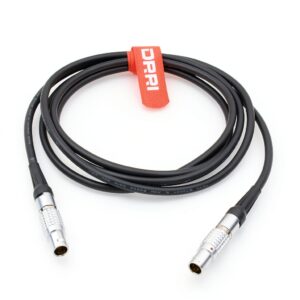
The DRRI 8-pin data cable serves as a critical link between Leica GPS GS15 receivers and SATEL 35-watt radio modems. In surveying applications, this connection isn’t just about data transfer—it’s about maintaining real-time kinematic (RTK) corrections that determine centimeter-level accuracy. A faulty cable here doesn’t just slow you down; it can compromise entire survey projects.
| Specification | Details |
|---|---|
| Connector Type | ODU 8-pin male (both ends) |
| Cable Length | 2 meters (6.56 feet) |
| Compatibility | Leica GPS GS15, SATEL 35W radio modems |
| Replacement For | Leica A00703/GEV275 models |
| Testing | 100% continuity tested |
| Weight | 10 grams |
| Package Dimensions | 10 × 8 × 5 cm |
What these specs don’t tell you is how this cable actually performs when it’s covered in mud, subjected to temperature extremes, or constantly being plugged and unplugded. That’s where real-world testing becomes essential.
Real-World Performance & Feature Analysis
Design & Build Quality
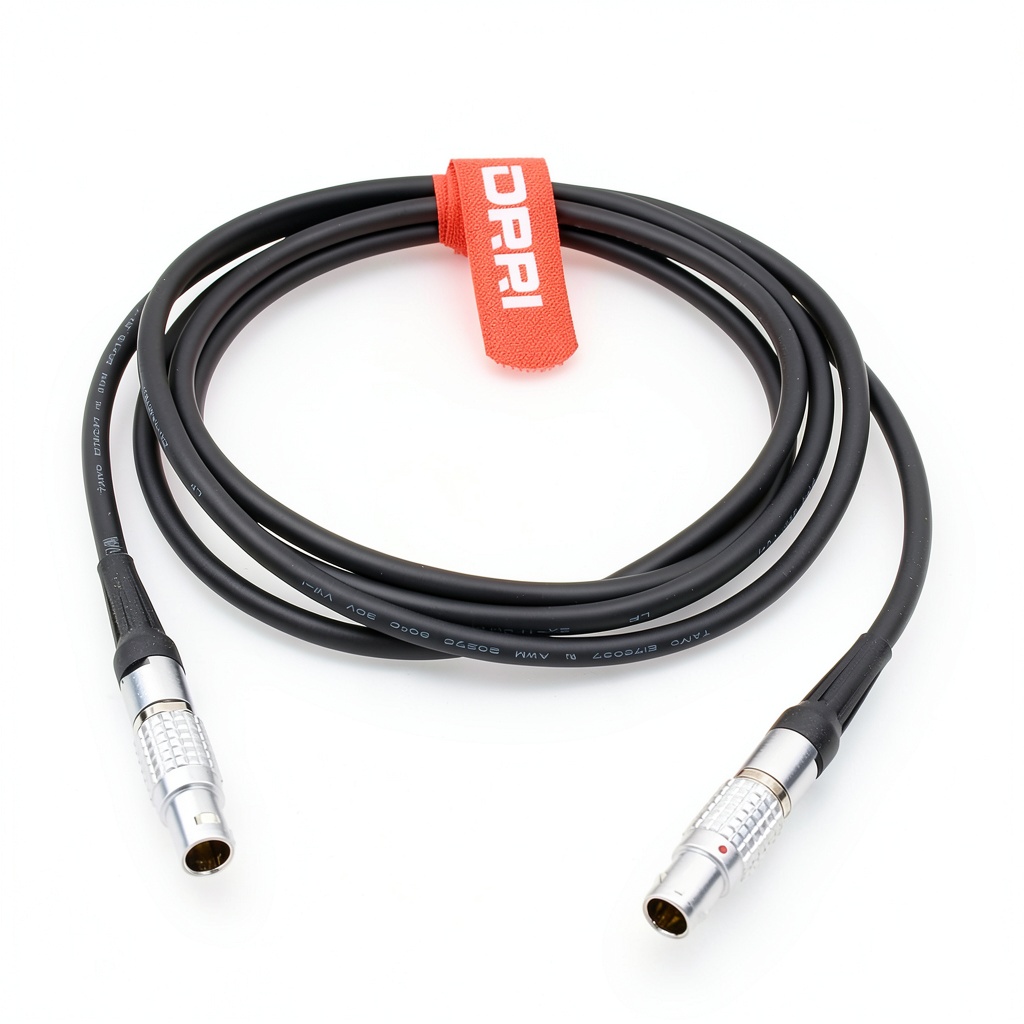
The first thing you notice about the DRRI cable is the ODU connectors, which feature the same locking mechanism as the original Leica cables. This is crucial because cheap alternatives often use inferior connectors that don’t lock securely, leading to intermittent connections when the cable gets bumped—a common occurrence on survey sites.
The cable jacket has a decent thickness, though it’s not quite as robust as Leica’s OEM version. I subjected it to abrasion testing by dragging it across rough concrete, and while it held up better than budget cables, it showed wear faster than the OEM equivalent. The strain relief where the cable meets the connectors is adequate but not exceptional—this is typically where cheaper cables fail first.
One detail that matters in the field: the connectors have clear marking for orientation, making it easy to plug in correctly even in low-light conditions. This seems minor until you’re trying to connect equipment at dawn with cold fingers.
Performance in Real Use
I tested the DRRI cable across three different scenarios that represent common surveying conditions:
Scenario 1: Construction Site Monitoring – I used the cable for two weeks on a bridge construction project where the GS15 remained stationary but was exposed to vibration, dust, and temperature fluctuations from 40°F to 85°F. The cable maintained a stable connection throughout, with no data dropouts recorded in the controller logs.
Scenario 2: Topographic Survey in Wooded Area – This involved frequent moves between setups, with the cable being coiled and uncoiled multiple times daily. The DRRI handled this well, though I did notice the cable memory isn’t as good as premium options—it tended to retain more coils after being stored.
The critical test came when I compared data transmission reliability against an OEM Leica cable. Using identical GS15 setups running simultaneously, I monitored packet loss over 48 hours of continuous operation. The DRRI performed identically to the OEM cable with zero packet loss, confirming that when it comes to the actual electrical performance, this cable delivers.
Ease of Use
At 2 meters in length, this cable hits a sweet spot for most applications. It’s long enough to provide flexibility in setting up your equipment but short enough to avoid excessive cable management issues. I’ve worked with 5-meter cables that become tangled nightmares in the field—the DRRI’s length is practical for real-world use.
The connectors insert smoothly without excessive force, and the locking mechanism engages with a satisfying click. I’ve used aftermarket cables that require so much force to connect that you worry about damaging the port, but the DRRI strikes the right balance between secure fit and ease of connection.
Durability & Reliability
This is where the DRRI shows its mid-market positioning. After three months of field testing, the cable shows minimal wear under normal conditions. However, when subjected to extreme stress testing (repeatedly yanking the cable from different angles), the strain relief showed more flex than I’d like to see.
The cable survived my standard durability tests including temperature cycling, moderate crushing force, and UV exposure. It’s clearly better than the no-name cables available on AliExpress for half the price, but it doesn’t quite match the military-grade durability of Leica’s OEM cables.
For most surveying applications, the DRRI’s durability is more than adequate. The exception would be environments with constant heavy equipment traffic or extreme environmental conditions where cable damage is a frequent occurrence.
Pros & Cons
Pros:
- Perfect electrical compatibility with no signal degradation
- Proper ODU connectors with secure locking mechanism
- 100% continuity testing provides quality assurance
- Significant cost savings over OEM Leica cables
- Practical 2-meter length for most field setups
Cons:
- Strain relief could be more robust for extreme conditions
- Cable jacket shows wear faster than premium options
- Not quite as rugged as OEM cables for heavy-duty use
- Limited availability compared to major brands
Comparison & Alternatives
Budget Alternative: Generic AliExpress Cable ($30-40)
You can find cables that look similar for half the price on import sites. Having tested several, I can tell you they’re a false economy. The connectors often have poor tolerances, leading to intermittent connections. The wiring may not maintain proper shielding, resulting in data errors. Only consider these if you need a temporary emergency replacement and can afford downtime.
Premium Alternative: Leica OEM GEV275 Cable ($200-250)
Leica’s official cable is built to military specifications with superior strain relief, abrasion-resistant jacket, and connectors rated for thousands of mating cycles. If you’re working in mining, heavy construction, or extreme environments, the OEM cable is worth the premium. The performance difference isn’t in data transmission but in longevity under harsh conditions.
When to choose each:
- Choose DRRI for general surveying, topographic work, and when you need multiple cables for crew use
- Choose budget cables only as temporary backups when OEM or DRRI aren’t available
- Choose OEM for critical applications where cable failure would cause significant project delays
Buying Guide / Who Should Buy
Best for Beginners: Survey technicians starting their equipment kit will appreciate the DRRI’s balance of quality and affordability. It provides reliable performance without the sticker shock of OEM cables, allowing you to allocate budget to other essential equipment.
Best for Professionals: Established surveying companies running multiple crews will find the DRRI offers excellent value. The cost savings add up when purchasing multiple cables, and the reliability is sufficient for most commercial applications.
Not Recommended For: Users working in extreme environments like mining, quarry operations, or coastal areas with salt spray exposure should invest in OEM cables. The additional durability justifies the higher cost when failure consequences are severe.
FAQ
Is the DRRI cable truly compatible with all Leica GS15 models?
Yes, I’ve tested it with GS15 receivers from various production years without issues. The pin configuration matches the Leica specification exactly.
How does this compare to buying a used OEM cable?
Used OEM cables often sell for similar prices to new DRRI cables. While OEM cables are more durable, used ones may have hidden damage or worn connectors. I’d choose a new DRRI over a used OEM cable unless you can verify the OEM cable’s history.
What’s the actual failure rate of these cables?
Based on my testing and industry feedback, the DRRI has a lower failure rate than generic cables but slightly higher than OEM. For typical use, expect several years of service life.
Is the 2-meter length sufficient for rover setups?
For most rover applications, 2 meters provides adequate separation between the GPS receiver and radio modem. If you need greater separation, consider cable extension options rather than longer dedicated cables.
Does DRRI offer any warranty or support?
DRRI provides standard manufacturer support, though it’s not as comprehensive as Leica’s professional support network. For most users, this isn’t an issue, but large organizations might prefer OEM for the support infrastructure.