Introduction
I never thought much about sunglasses beyond their basic function until the landscape of shopping in my neighborhood began shifting dramatically. The signs started appearing in windows last spring – “Store Closing,” “Final Sale,” “Everything Must Go.” It was during this period of retailer closing stores that I found myself reevaluating what I truly valued in the items I chose to keep in my life. The constant churn of businesses shutting down made me more intentional about my purchases, particularly when it came to accessories that I would use daily. I began looking for pieces that offered both immediate utility and long-term satisfaction, items that wouldn’t feel disposable when the next trend arrived.
There’s something sobering about watching familiar storefronts go dark, about seeing spaces that once buzzed with activity become empty shells. It makes you consider the transience of retail and the permanence you want from the objects you bring into your life. I started paying closer attention to the construction of things, to the materials used, to whether something felt like it would last beyond a single season. This mindset led me to look differently at sunglasses, moving beyond mere fashion statements to consider them as practical tools that needed to withstand daily use while maintaining their aesthetic appeal.
The shift wasn’t immediate, but gradual, like the changing of seasons. I found myself less interested in cheap, trendy pairs that would crack or scratch within months and more drawn to eyewear that felt substantial, that had weight and presence. I wanted sunglasses that would become part of my daily uniform, reliable companions through sunny commutes, weekend outings, and everything in between. This changing perspective coincided with the increasing number of store closures in my area, creating a strange juxtaposition of loss and discovery.
Real-life Context
My daily routine involves considerable time outdoors – walking to the subway, waiting for buses, running errands during lunch breaks. I’ve always been someone who appreciates the practicality of good sunglasses, but my approach had been somewhat haphazard. I’d buy inexpensive pairs from chain stores, lose them, break them, or simply grow tired of them within a few months. The constant replacement felt wasteful, both financially and environmentally, but I hadn’t found a compelling reason to invest in something more substantial.
The turning point came during a particularly bright afternoon when I was walking between appointments. The sun was intense, glaring off building windows and car windshields, and my cheap sunglasses were doing little to reduce the strain on my eyes. I remember squinting constantly, my head beginning to ache from the effort. That discomfort, combined with the growing awareness of how many local retailers were struggling or closing entirely, made me reconsider my approach to everyday accessories.
Around this time, I noticed how certain items in my life had proven their worth through consistent performance. My sturdy leather bag, my reliable winter boots, my favorite coffee mug – these were things I never thought about replacing because they simply worked, day after day, year after year. I began wondering if my sunglasses could occupy that same category of trusted daily companions rather than being temporary, disposable accessories. The context of disappearing retail options made this consideration feel more urgent, as if I needed to make smarter choices while I still had them.
I started paying attention to the sunglasses other people wore, particularly those who seemed to hae a more curated approach to their accessories. I noticed how certain frames maintained their shape over time, how some lenses didn’t develop the fine scratches that plagued my cheaper pairs. These observations happened against the backdrop of store closing signs, creating a narrative about value and longevity that felt increasingly relevant to my purchasing decisions.
Observation
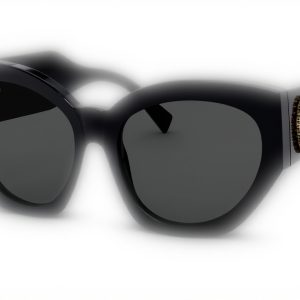
The first thing I noticed about the Versace VE4376B sunglasses was how they felt in my hands. There was a substantial quality to them that immediately distinguished them from the flimsy plastic frames I was accustomed to. The black acetate had a smooth, almost warm texture, and the hinges moved with precise resistance rather than loose, uncertain motion. When I put them on, the fit was secure without being tight, the 54mm lens width providing ample coverage without overwhelming my face.
I began wearing them during my morning commute, initially just testing how they handled the specific challenges of city life. The grey plastic lenses proved surprisingly effective at reducing glare without making the world appear unnaturally dark. Walking past construction sites where sunlight reflected off metal surfaces, waiting at crosswalks with cars turning and flashing their headlights, even just reading my phone while standing in patches of direct sunlight – these ordinary moments became opportunities to appreciate the practical benefits of well-designed eyewear.
What struck me most was how the sunglasses performed consistently across different lighting conditions. On overcast days when the sun played hide-and-seek behind clouds, the lenses didn’t create that tunnel vision effect that makes some sunglasses difficult to wear except in brightest conditions. During bright midday hours, they provided reliable protection without the need to squint or look away from reflective surfaces. This adaptability made them genuinely useful rather than situationally convenient.
I also observed how the temple length of 140 millimeters and bridge width of 19 millimeters created a comfortable distribution of pressure. Unlike cheaper sunglasses that often dug behind my ears or left red marks on my nose, these maintained their position without constant adjustment. I could wear them for hours during weekend outings or through back-to-back outdoor meetings without that nagging awareness of having something pressing uncomfortably on my face.
The durability of the acetate frame became apparent through small incidents that would have damaged my previous sunglasses. When they slipped from my hands onto pavement, when they got jostled in my bag, when I accidentally sat on them – each time I expected to find cracks or deep scratches, but the material proved remarkably resilient. These minor tests happened organically through daily use, never as intentional stress tests but as the natural consequences of carrying something with me constantly.
Reflection
It took me several weeks of daily wear to fully appreciate how these sunglasses had shifted from being merely functional to becoming an integral part of my daily experience. I didn’t realize at the time that this would be so important, but having a reliable accessory during a period of so much retail uncertainty created a strange sense of stability. While stores around me were closing and shopping habits were changing, these sunglasses remained constant, performing their simple function day after day without drama or disappointment.
This consistency prompted me to think more deeply about what we mean when we describe something as “luxury.” I had previously associated the term with extravagance, with items that served more as status symbols than practical tools. But my experience with these sunglasses suggested something different – that luxury could manifest as reliability, as thoughtful design, as materials chosen for their performance rather than their cost. The black acetate frame wasn’t just aesthetically pleasing; its durability meant I wasn’t constantly worrying about damage or planning its replacement.
I found myself reflecting on how the retail landscape’s transformation was influencing my relationship with material possessions. The disappearance of familiar stores made each purchase feel more significant, as if I were voting for certain values with my spending. Choosing items that promised longevity over disposability, that emphasized function alongside form, felt like a small rebellion against the throwaway culture that perhaps contributed to so many retailers struggling.
The sunglasses became a lens through which I considered broader questions about consumption and value. Why had I previously been content with eyewear that needed frequent replacement? What did it say about my expectations that I considered it normal for sunglasses to be temporary accessories? These questions felt particularly relevant as I watched small businesses shutter and larger chains consolidate, the commercial environment around me visibly changing while these simple black frames remained unchanged on my desk each morning.
There was also something meaningful about how the sunglasses served their purpose without calling attention to themselves. They weren’t flashy or overtly branded; their value came from how they worked rather than how they appeared. This quiet competence reminded me that the most reliable things in life often operate in the background, performing their functions without fanfare. In a world where so much feels temporary and uncertain, finding objects that simply work as intended provides a peculiar kind of comfort.
I began noticing how other well-made items in my life shared this quality of understated reliability. My grandmother’s cast iron skillet, my father’s leather watch strap, my favorite wool sweater – these were things that had accumulated character through use rather than showing their age through deterioration. The sunglasses seemed to be entering that category, their minor scratches and wear patterns telling the story of daily life rather than signaling impending failure.
Conclusion
Months have passed since I first started wearing these sunglasses regularly, and the retail landscape continues to evolve. More stores have closed, new ones have opened, and shopping habits have adapted to these changes. Through it all, the Versace VE4376B has remained a constant in my daily routine, its black acetate frame and grey lenses seeing me through countless commutes, weekend adventures, and ordinary moments in between.
What began as a practical purchase during a period of retail transition has become something more meaningful – a reminder that good design isn’t about trends or status but about solving everyday problems with intelligence and care. The sunglasses haven’t changed how I look at the world in a dramatic sense, but they have changed how I see the relationship between the objects I choose and the life I live with them.
I’ve come to appreciate that luxury, when properly understood, isn’t about extravagance but about thoughtful elimination of daily frustrations. It’s about not having to squint in bright sunlight, not worrying about frames breaking, not constantly adjusting ill-fitting temples. These small freedoms accumulate over time, creating a quality of experience that transcends the item’s initial cost.
As I watch the continuing transformation of retail in my neighborhood, I find myself applying this lens to other purchasing decisions. I look for items that promise this same combination of immediate utility and long-term satisfaction, that solve practical problems without creating new ones. The experience has taught me that the most valuable things often aren’t the most expensive or flashy but those that perform their intended function so well that you eventually stop noticing them altogether, except in their absence.
The sunglasses now live in their case on my entryway table, ready for whatever the day brings. They’ve accompanied me through seasons of change, both personal and commercial, their simple reliability becoming a small anchor in shifting times. I suspect they’ll continue to do so for years to come, their black frames and grey lenses witnessing whatever comes next in this ever-evolving retail landscape.
 Animal Health API World Outlook 2027-2032 ICON Group